25-step music production process checklist and video workshop >>>
3 Decent Starter Studio Recording Microphones for Music Producers:
|
You know that different experienced music producers will give different recommendations for beginner studio recording microphones. You probably also already know by now that mic recommendations are more a matter of opinion than a matter of fact. The "best mic" mostly comes down to who and what you're trying to
record. Best for acoustic guitar is not always best for snare drum. In
the same way the same snare will also sound different recorded through
different microphones. Players also play instruments in different ways so the mic choice needs to reflect this to capture their style in the best way for the record. You'll need to form your own opinion when it comes to your choice of recording microphones for your home music studio. |
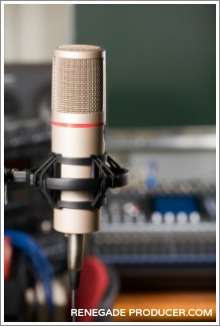 |
I
will give you some possible candidates to consider further below.
Don't just take my word and rush off to buy right now. You want to research
and test to choose the best recording microphones for your studio, your
style and your budget.
You won't find tech-speak about polar
patterns, capacitors, acoustical theory and all such stuff on the page
below. 80/20. Stick to what you really need to know when you look for
your studio recording microphones.
What type of microphone should I get for my home recording studio?
Most studio microphones are either dynamic or condenser mics...
Dynamic microphones
which usually look like an ice-cream on a cone are generally used for
live performance though you can use them in your home music studio where
they prove especially good with louder, more energetic vocalists,
guitars and drums.
Dynamic mics tend to be less clear than condenser mics so you may have to work to find your perfect sound.
You'll find dynamic microphones are cheaper and much more robust than condenser microphones.
Two examples of dynamic microphones found in almost every studio are the Shure SM57 and Shure SM58. These two microphones are inexpensive and will get you the audio quality you need to produce music with various artists because both mics are good all round microphones.
Yes, you'll find cheaper dynamic microphones than the two I suggest
above, though when you go for lower prices than the two dynamic mics
above you exit the "quality" sound arena. Be warned. Either of the two
microphones above will get you started with a bang in your home
studio, because both are well respected.
So buy the above two mics for a good start or research and buy more specific microphones for your needs.
You
can never have too many mics in your collection because different
tracks or artists call for different microphones to catch the perfect
sound for the track you're working on.
You may need a much clearer vocal sound than a dynamic microphone can deliver. Enter the condenser microphone...
You'll discover at some point (right now!) that you need at least one reasonable quality condenser microphone for your home recording studio kit.
Condenser microphones are usually stand mounted rather than hand-held and are designed more specifically with the studio in mind.
You'll
find most condenser mics more sensitive and fragile than dynamic mics
and you can also expect to produce a much clearer recording in most
cases (when used right!).
Top quality condenser mics can cost
thousands of dollars. Your budget for a entry-level condenser mic
should be at least $200-$300 to make it worth your while in terms of
audio quality.
You'll need to always shove add a pop-guard between vocalists and a condenser mic to keep the artist at a good distance and prevent "pops" caused usually by p's,b's and d's in the vocal.
The Rode NT1A is a decent entry-level quality condenser microphone at an affordable price. It works well on vocals and also on acoustic guitars.
Where and how should I buy my recording microphones?
You can test and compare the sounds of the microphones I mention above along with other mics at any quality music store in your area, then search the Internet for the best price on the mic you chose.
You'll often find cheaper prices from online retailers and Amazon so it's up to you if you want to support your local retailer where you tested the mics or buy them cheaper online. Amazon has a bit of buyer protection built-in so this can provide some comfort, especially on high-end items like more expensive microphones.
Smaller, local retailers need all the help they can get though so if you want some good Karma then get your gear from them. Enough said, so...
... may your studio microphones collection grow bountiful!
You might also like these related posts:

Simplify the Music Production Process with This Easy-to-Follow Checklist and Video Guide

Discover a Step-by-Step Workflow Overview for Electronic Music Production and Beat-Making With This Checklist & Video Workshop Walk-Through. Know How to Finish Tracks and How to Do It on a Consistent Basis!
Grab it and get immediate access below right now!

Learn to understand equalisers and frequencies to supercharge your mixing skills and get results, fast...

New producer? Learn everything you need to produce your first professional track right now...

Would you like to discover the simplest and easiest way to learn music theory as a music producer?
Share this post. Spread the knowledge so other producers can benefit too:
- Renegade Producer
- Home Studio
- Studio Microphones
ⓘ Some pages contain affiliate links so I might earn a commission when you buy through my links. Thanks for your support! Learn more
Get The Video Workshop + Checklist Straight Away:
The Music Production Process Narrowed Down to Just 25 Steps
Keep your eye on the big picture, move forward and finish more tracks you're proud of.



Blog | Newsletter | About | Contact
Disclosure/Disclaimer | Privacy Policy Copyright © 2008-2024 RenegadeProducer.com